
Sanjay Mohindroo
A gripping retelling of the 1757 Gokul battle, where Naga Sadhus clashed with Abdali's army, and scholars lit the way.
A Town, a Temple, a Roar of Resistance
March 1757.
Gokul—a small, sacred town by the Yamuna, usually alive with the hum of bhajans and bells—stood eerily quiet.
News had arrived. Ahmad Shah Abdali, the fierce Afghan warlord who had already pillaged Delhi, Mathura, and Vrindavan, was sending a detachment to plunder Gokul. Known for leaving cities smouldering and temples shattered, Abdali’s name echoed like thunder across North India.
But Gokul was no ordinary town.
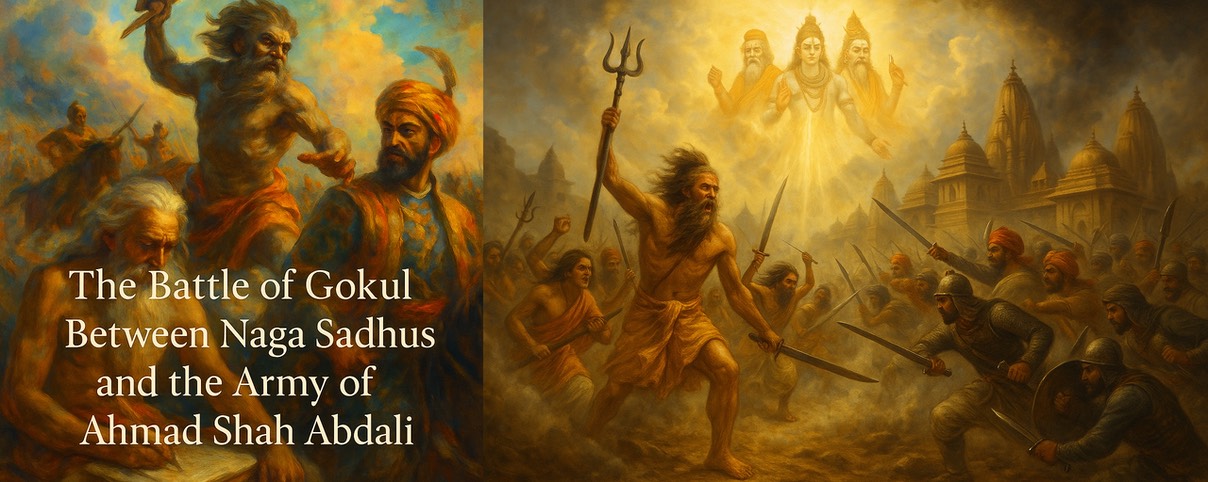
It was a centre of Bhakti devotion and the spiritual playground of Krishna. It also housed something the Afghans weren’t expecting: a battalion of Naga Sadhus—warrior monks with ash-smeared bodies, tridents in hand, and courage in their hearts.
What followed wasn't just a skirmish.
It was a collision between brute power and unshakable belief—between swords and saffron, steel and silence.
Let’s dive deep into the untold truths of the #BattleOfGokul, explore its intellectual backdrop, and rediscover the minds that shaped a remarkable chapter in Indian history.
The Smoke Before the Fire
The Fourth Invasion and Abdali’s March
In 1757, Ahmad Shah Abdali invaded India for the fourth time. Delhi lay devastated, and the temples of Mathura and Vrindavan were looted. His campaign was swift and brutal.
While Abdali’s forces ravaged cities, they were blind to the fire quietly building in Gokul.
Not a fire of gunpowder.
But a fire of faith.
#AhmadShahAbdali #GokulDefense
The Guardians in Saffron
Who Were the Naga Sadhus?
Often misunderstood, the Naga Sadhus are more than mystics.
They’re ascetics turned defenders. Part of ancient akharas (spiritual warrior orders), these sadhus practiced severe penance, martial arts, and swordplay. When called upon, they stood as both protectors and philosophers.
They weren’t monks who fled war.
They were monks who fought it—barefoot, bare-chested, fearless.
By 1757, Gokul had nearly 4,000 Naga and Bairagi Sadhus. When word of Abdali’s approach spread, they didn’t run. They stood up.
As one folk verse from the region says:
“Ash smeared warriors, in silence they stood, Defenders of dharma, in saffron and wood.”
The Intellectual Firepower of the Time
Wisdom in the Air: Scholars Who Shaped the Era
Let’s not miss this: The 18th century was also an age of intellect.
Even as swords clashed, philosophers, poets, and polymaths shaped public thought. The resistance wasn’t just physical—it was philosophical.
Here are a few brilliant minds active in or around the period:
Swami Haridas (Legacy Continued)
A Bhakti saint whose teachings on divine love resonated across Mathura and Vrindavan. His disciples—musicians, thinkers, and sadhus—formed the intellectual soul of Gokul. #SwamiHaridas #BhaktiMovement
Vishwanath Deva Tirtha
A scholar-saint known for training Naga Sadhus in Vedanta and warfare. He reportedly organized readings of the Gita alongside combat drills. Knowledge and defence weren’t opposites to him—they were siblings.
Balram Das Puri
Little known, but revered in oral traditions, this philosopher was said to have written treatises defending the right to self-defence in dharma. His ideas strengthened the morale of the Naga Akharas.
Goswami Brijnath Sharma
A Mathura-based pundit who preserved and commented on ancient texts during the Abdali invasions. His lineage continued the oral retelling of the Gokul battle and the resilience of the saints.
These weren't men of idle debate.
They were architects of courage.
Their thoughts lit the minds of the sadhus. Their words became shields. Their presence built a spiritual ecosystem that refused to bow to tyranny. #IndianPhilosophy #WarriorSaints
The Battle Itself
When Abdali's Men Reached Gokul
As per historian G. S. Sadiq, a detachment of Abdali's troops—expecting an easy plunder—approached Gokul.
They were met with 4,000 Naga Sadhus, wielding tridents, spears, and raw fury.
The fight was fierce.
About 2,000 sadhus died. An equal number of Abdali’s soldiers fell.
But the Afghan unit failed.
They withdrew.
Gokul was spared.
A Marathi letter from April 1757, referenced by Sadiq, tells us:
“All the Bairagis perished, but Gokul-Nath (the idol) was saved.”
That says everything.
#TempleDefenders #NagaSadhus
Not Just Battle—A Legacy
The Battle of Gokul wasn’t recorded in grandeur like Panipat or Plassey. It wasn’t a clash of empires. But it was something more intimate, and just as powerful.
It was faith defending life.
It was philosophy defending identity.
It was a discipline defending civilization.
Gokul stood because its sages stood. Because its scholars taught. Because its people believed.
And because sometimes, when all is lost, the barefoot rise higher than kings.
Truth vs. Legend
Separating Fact from Folklore
Modern myths inflate the battle—some claim 30,000 Afghans were slain. That’s unlikely. Contemporary records suggest both sides lost about 2,000.
But the emotional truth remains:
A small town said no to terror.
And won.
Isn’t that legend enough?
Legacy for Today’s Thinkers and Doers
In a time where noise often drowns wisdom, and might tries to silence right, this story matters.
Because the Battle of
Gokul wasn’t just physical. It was intellectual resistance.
It reminds us that warriors can be thinkers. And thinkers can be warriors.
That’s the kind of leadership we need—on the streets, in offices, in homes. #HistoryThatMatters #LeadershipLessons
Ashes Never Fade
The Gokul battle proves something timeless:
You don’t need armies to resist evil.
You need belief.
You need courage.
You need teachers who teach you why you must stand.
And when that happens, even a town of saints can stop an empire.